Origins
A fortress for relics, not for war
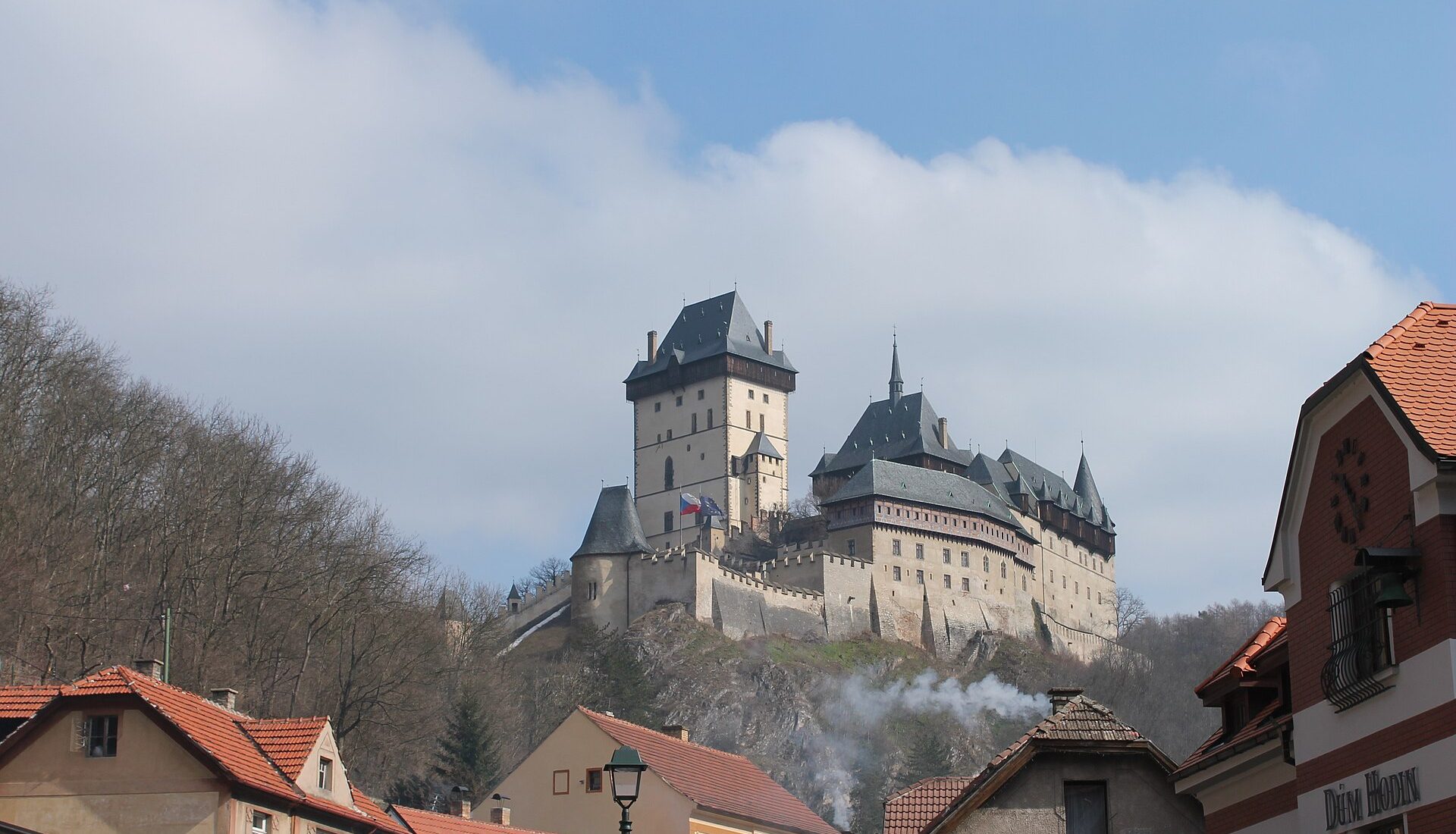
Charles IV chose a limestone spur above the Berounka valley, close to Prague but hidden in the hills, and built upward: the Imperial Palace at the bottom, the Marian Tower above it with the church and St Catherine's Chapel, and the Great Tower at the top with the Chapel of the Holy Cross. The higher you climbed, the holier the room. Women were forbidden beyond the palace; the emperor himself fasted before entering the chapel.
A timeline
Key moments on the hill
1348 — foundation stone laid. 1365 — the Chapel of the Holy Cross is consecrated. 1422 — the castle withstands a seven-month Hussite siege. 1619 — the crown jewels leave for good. 1887–1899 — Josef Mocker's Gothic-revival reconstruction gives the castle its present silhouette.
Charles IV
The emperor who collected holiness
Charles gathered relics the way later rulers gathered paintings: thorns from the Crown of Thorns, a nail and a splinter of the True Cross, the sponge and the lance. They were shown once a year in Prague and kept the rest of the time at Karlštejn, together with the Imperial crown of the Holy Roman Empire. The castle was the vault of a whole idea of sacred kingship.
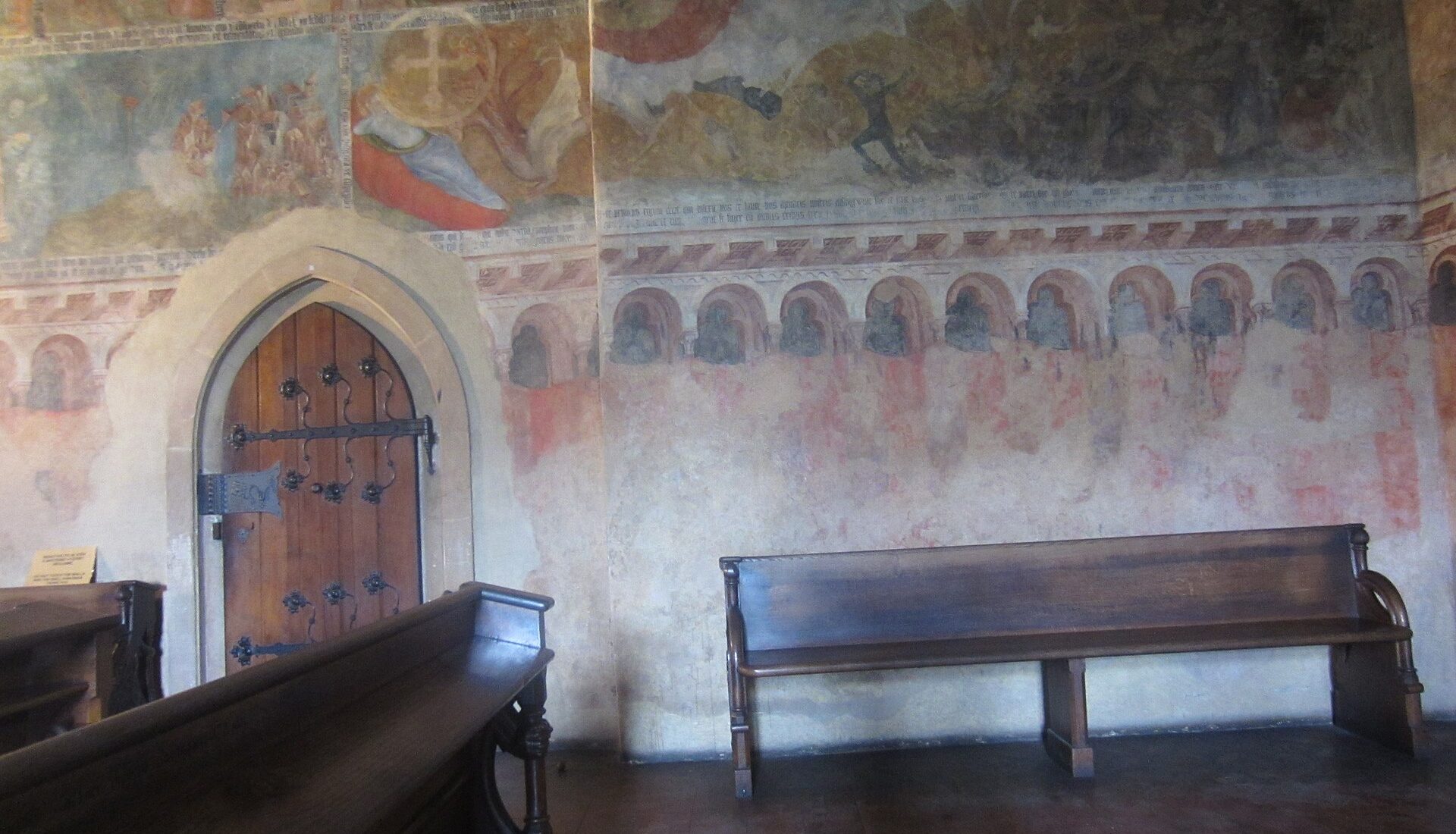
The Chapel of the Holy Cross was shut behind four doors with nineteen locks. Today sixteen visitors an hour walk in.
The building
Three towers, rising in rank
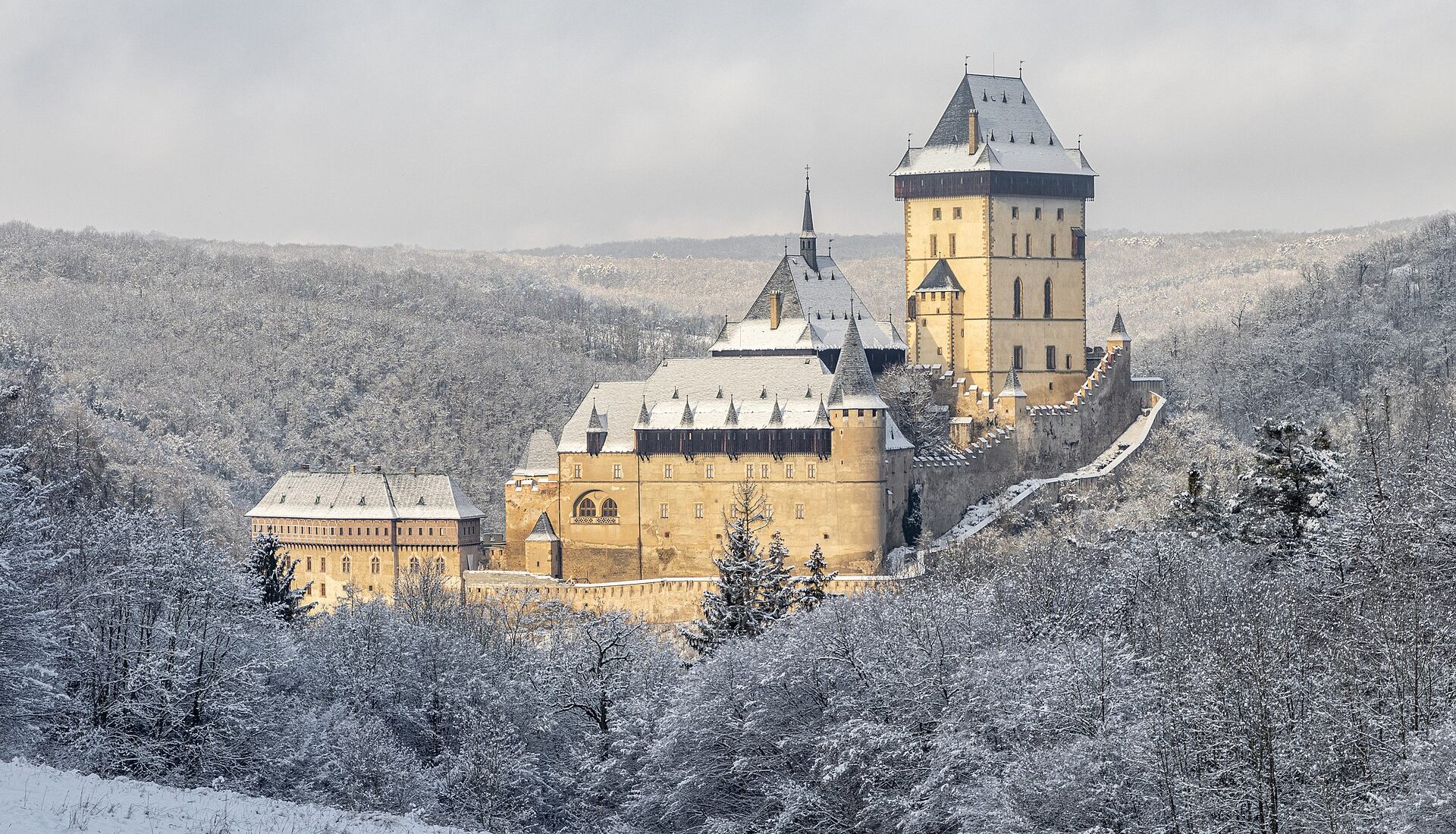
The castle is a staircase of buildings: the well tower and burgrave's house at the gate, the Imperial Palace with its halls, the Marian Tower, and finally the Great Tower with walls up to six metres thick. The 19th-century restoration by Josef Mocker added the steep roofs and crisp battlements that make the postcard view; underneath, the medieval structure is intact.
Layers of style
Gothic core, Gothic-revival skin
What you see from the valley is two centuries talking to each other.
The 14th-century castle
The palace, the towers and the chapels of Charles IV, with wall paintings and panel paintings of the 1360s.
Renaissance additions
Rebuilding after the Hussite wars and under the Habsburgs, before the castle fell into disuse.
Mocker's restoration
The 1887–1899 reconstruction in the purist Gothic-revival manner — the roofs, the battlements, the silhouette.
Inside the castle
What you actually see with your ticket
The Imperial Residence tour covers the palace halls and the first floor of the Marian Tower: the Courtiers' Hall, the Knights' Hall with St Nicholas' Chapel, the emperor's bedchamber with St Wenceslas' Chapel and the castle deanery. The Chapels tour adds the Church of the Virgin Mary, St Catherine's Chapel and the Great Tower staircase, and ends in the Chapel of the Holy Cross.